Signage Approval in Dubai: What Needs a Permit Before You Print
Signage approval in Dubai generally depends on where the sign will be displayed and what kind of property it's on. Exterior signage on a shopfront, building facade, or freestanding structure typically needs approval from the relevant municipal or free zone authority before installation, while smaller interior signage, such as reception or office wall graphics, is less likely to need external permits but may still need landlord or mall approval. Exact requirements vary by emirate, free zone, mall, and building, so confirm with the relevant authority or landlord before finalizing a large-format sign.
This is general guidance to help you plan your signage project, not legal advice. Confirm exact permit requirements with the relevant authority, mall management, or landlord for your specific location.
Why Does Signage Approval Exist?
Cities regulate exterior signage for safety, consistency, and visual standards: oversized or badly placed signs can obstruct visibility, create structural risk, or clash with a building or district's approved appearance. Malls and commercial landlords add their own layer of rules on top of municipal requirements, often covering size, illumination, materials, and exact placement on a shopfront.
For a business, the practical implication is that a sign you've designed and printed can be refused installation or ordered to be removed if it doesn't have the right approval. That makes checking requirements before printing, not after, the difference between a smooth installation and a wasted print run.
Signage That Typically Needs External Approval
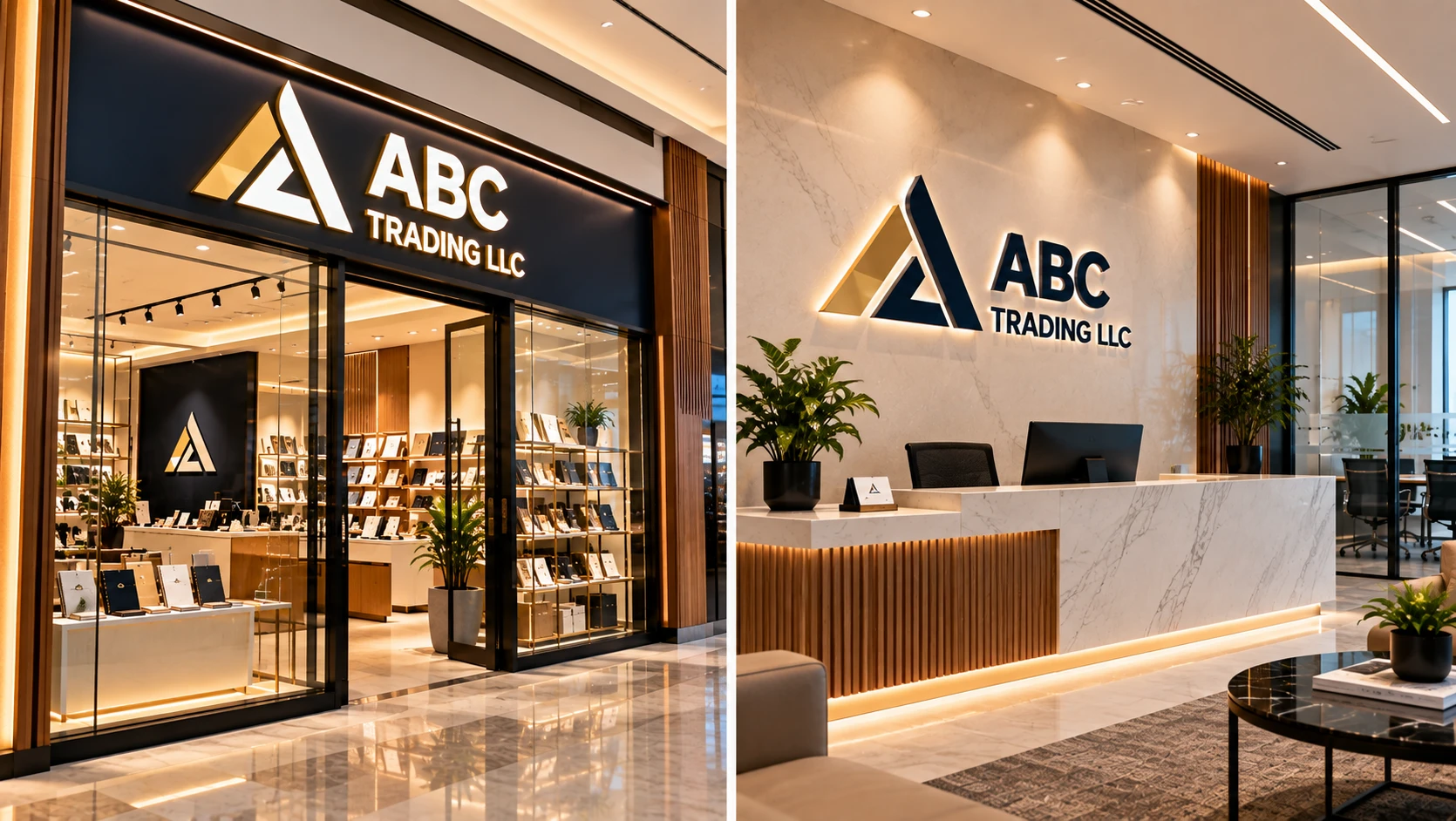
Exterior signage is the category most likely to require formal approval from a municipal authority, free zone authority, or the relevant governing body for your area. This generally includes shopfront signs, building facade branding, freestanding pylon or monument signs, and any illuminated or electrically connected signage installed outdoors. The specific authority and process depend on your emirate and whether your business is on the mainland or in a free zone. [CONFIRM: applicable authority and process by location]
Signage That May Not Need External Approval
Interior signage, such as reception branding, office wall graphics, directional signage inside a building, or a roll-up banner used temporarily at an internal event, is generally less likely to require external municipal approval, since it doesn't affect the building's external appearance or public safety in the same way. However, landlord, building management, or mall rules can still apply even to interior spaces, particularly in shared or leased commercial premises. Always check your lease or mall handbook rather than assuming interior signage is automatically unrestricted. [CONFIRM: landlord and mall interior signage rules]
Mall and Landlord Rules
Many UAE shopping malls maintain their own detailed signage guidelines covering size limits, permitted materials, illumination type, exact placement on the shopfront, and sometimes even approved color and font standards to maintain a consistent mall appearance. These mall-specific rules typically apply on top of, not instead of, any municipal requirement, so a sign that satisfies one may still need to satisfy the other. Request your mall's signage handbook or guidelines directly from mall management before finalizing your design.
For a standalone building or a free zone office, similar rules often come from the landlord or the free zone authority rather than a mall, so the same principle applies: check with whoever manages the building or district before you print.
What Does the Approval Process Typically Involve?
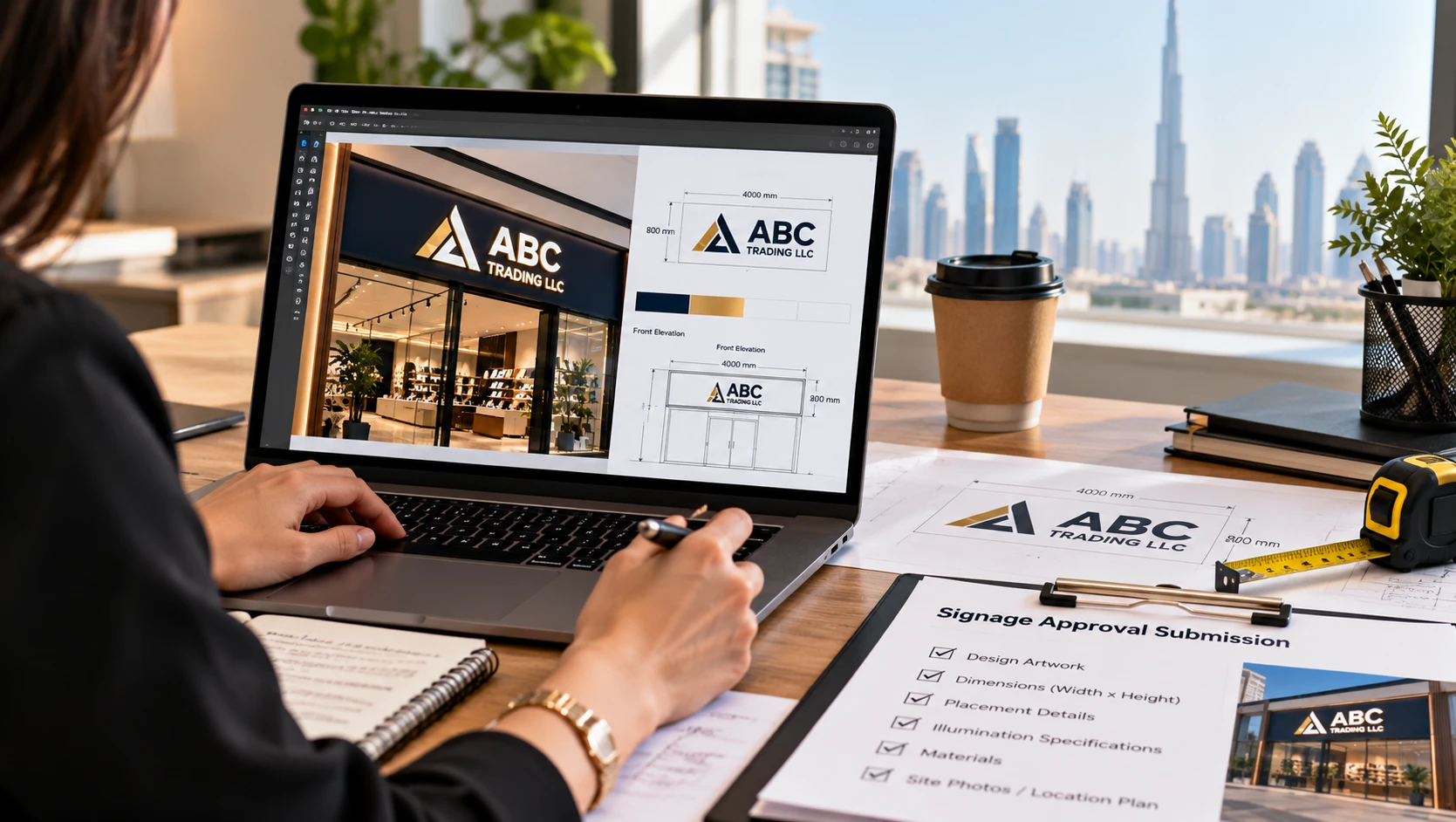
While the exact process varies by authority, it commonly involves submitting design artwork and sign dimensions and placement details for review, sometimes alongside structural or electrical specifications for larger or illuminated signs. Approval can take time, and a design change requested during review can affect your final artwork and printing timeline. Build this into your project schedule from the start rather than treating it as a final formality. [CONFIRM: approval process, timeline, and documentation required]
Free Zone vs Mainland Signage Rules
Businesses operating in a UAE free zone often go through the free zone authority for signage approval rather than the municipal authority that applies to mainland businesses, and the two can have different processes, forms, and standards. If your business has both a free zone office and a mainland retail presence, don't assume approval obtained for one covers the other, since they're typically separate systems entirely. Confirm the correct authority for each specific location your business operates from. [CONFIRM: free zone vs mainland signage authority]
This distinction matters most for companies expanding into a second location or a second emirate, where it's easy to assume the process that worked the first time will work again. Treat each new location as a fresh check rather than a repeat of a previous approval.
Illuminated and Electrical Signage: An Extra Layer
Signs that include lighting, whether internally illuminated letters, a backlit panel, or LED elements, typically involve an additional layer of approval beyond a simple printed or non-illuminated sign, since electrical safety and installation standards come into play alongside the visual design approval. This can mean coordinating with a licensed electrical contractor for installation, not just a signage printer, and it generally extends the overall timeline compared with a non-illuminated sign. If your design includes any lighting element, flag this early in your planning, since it changes both the approval process and the installation requirements. [CONFIRM: illuminated signage approval and installation requirements]
Designing Signage With Approval in Mind
Where mall or municipal guidelines specify size limits, materials, or illumination rules, design your artwork within those constraints from the outset rather than designing freely and hoping for approval afterwards. This is especially relevant for size and color, since some malls specify exact permitted dimensions or restrict certain colors or finishes for shopfront consistency. Confirm these constraints before your designer starts artwork, not after a first draft is rejected.
Timing Your Print Around Approval
Because approval can take time and isn't guaranteed on the first submission, avoid printing a large-format sign before approval is confirmed. If your timeline is tight, ask whether a provisional or draft approval is possible to review before final artwork, or consider a temporary, easily replaceable interim sign, such as a roll-up banner, while permanent signage approval is in progress. See Roll-Up Banners for a flexible interim option.
Renewing and Updating Approved Signage
Approval isn't always a one-time event. If your company rebrands, changes its logo, or wants to update an existing approved sign, this often requires a fresh approval process rather than simply reprinting the new design and swapping it in, since the authority or landlord approved the specific design that was submitted, not the location generally. Similarly, some approvals carry a renewal period tied to a trade license or lease term, after which the signage approval itself may need to be renewed alongside it. Keep a record of what was approved and when, so a future update or renewal doesn'tstart from scratch.
What Happens If a Sign Isn't Approved?
An installed sign without the correct approval can be subject to a fine, a removal order, or a requirement to modify it to meet the rules, which is a costly and disruptive outcome compared with checking requirements upfront. If you've inherited a sign from a previous tenant or a prior business setup, don't assume it was correctly approved. Confirm its status rather than replicating an unapproved design for a new sign. [CONFIRM: consequences of unapproved signage]
Working With Your Sign Printer
Tell your printer the exact location and property type, mall unit, standalone building, free zone office, so they can flag any known material, size or illumination constraints relevant to that location while producing your artwork. While the approval itself is typically obtained by the business or its representative rather than the printer, a printer familiar with local signage conventions can help you avoid an obviously non-compliant design before you invest in a formal submission. See Acrylic & Reception Signage and Wall & Floor Graphics for common signage formats.
Common Signage Approval Mistakes to Avoid
- Printing before approval is confirmed. A large-format sign printed ahead of approval is a wasted cost if the design needs to change.
- Assuming interior signage is unrestricted. Landlord and mall rules can still apply even indoors.
- Ignoring mall-specific guidelines. These often go beyond general municipal rules and can restrict size, colour or materials.
- Replicating a previous tenant's sign without checking its approval status. An inherited design may not have been correctly approved in the first place.
- Leaving approval to the last minute. The process can take time and may require design changes, so build it into your project schedule early.
Frequently Asked Questions
Q. Do I need a permit for a shopfront sign in Dubai?
Ans. Generally, yes, for exterior signage, though the exact authority and process depend on your location. Confirm requirements before finalising your design.
Q.Does interior office signage need approval?
Ans.Municipal approval is less commonly required, but landlord or mall rules can still apply. Check your lease or building guidelines.
Q.How long does signage approval take?
Ans.It varies by authority and sign type. Confirm expected timelines when you begin the process, and build this into your project schedule.
Q.What happens if my sign isn't approved after installation?
Ans.It can be subject to a fine or a removal order. Confirming approval before installation avoids this outcome.
Plan Your Signage Project
Confirm requirements with your mall, landlord or the relevant authority before finalising your design, then design within any known constraints from the start. For shopfront and office signage, see our Banners & Signage page or message us on WhatsApp with your location and project.