Eco-Friendly Printing Options in the UAE: Recycled Stock, Soy Inks and Reusable Merch
Eco-friendly printing in the UAE generally means three things: recycled or FSC-certified paper stock, soy or vegetable-based inks in place of conventional petroleum-based ones, and reusable merchandise chosen over single-use items. None of these is an all-or-nothing choice, and most companies improve their print footprint step by step rather than overhauling every order at once. Availability of specific eco-friendly materials and inks should be confirmed for each product, since not every option is offered across the full range.
This guide explains what each eco-friendly optionactually means, where it applies, and how to build a more sustainable print plan without assuming every claim on a packet is accurate.
Why This Matters to UAE Buyers?
Sustainability has moved from a niche request to a standard question in many procurement conversations, particularly for companies with international clients, government tenders, or an internal sustainability commitment to report against. Even for companies without a formal requirement, recycled stock and reusable merchandise are increasingly what clients and staff expect as a baseline rather than a premium add-on.
It's worth being clear-eyed about what "eco-friendly" print actually changes. A single order of recycled business cards has a small individual impact, but consistent choices across every printed item a company orders—cards, packaging, gifts, add up over a year. Treat this as a standing policy for how you print, not a one-off request for a single job.
Recycled and FSC-Certified Paper
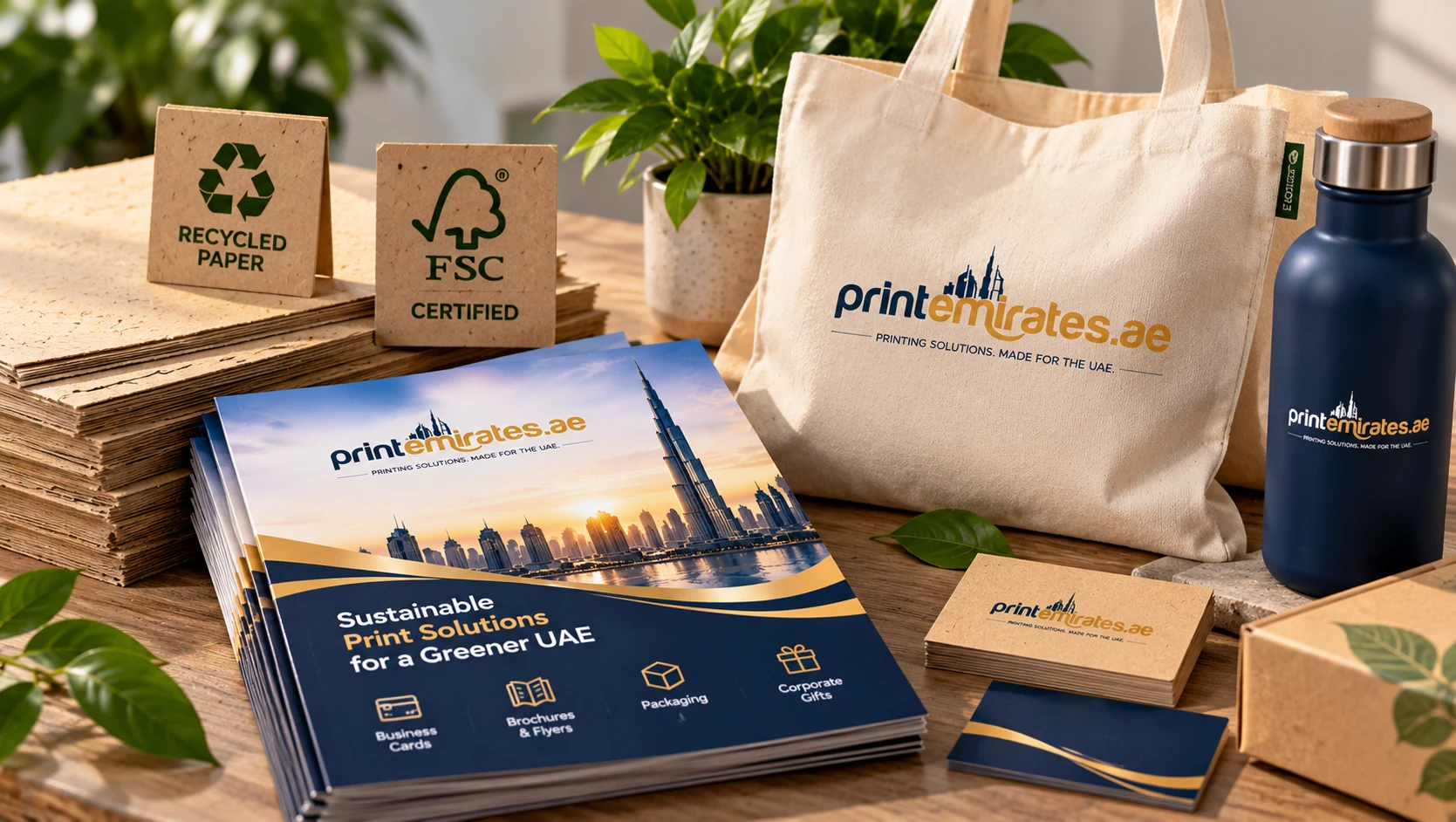
Recycled paper is made wholly or partly from post-consumer or post-industrial waste paper rather than freshly harvested wood pulp. FSC certification, from the Forest Stewardship Council, is a separate but related claim: it certifies that the wood used came from responsibly managed forests, whether or not the paper itself is recycled.
In practice, recycled stock is available across a range of GSM weights and finishes, though the exact look and feel can differ slightly from virgin paper, often with a warmer, more natural tone. For most business printing, brochures, flyers, and letterheads, this difference is subtle and often reads as a positive, textured quality rather than a downgrade.
Soy and Vegetable-Based Inks
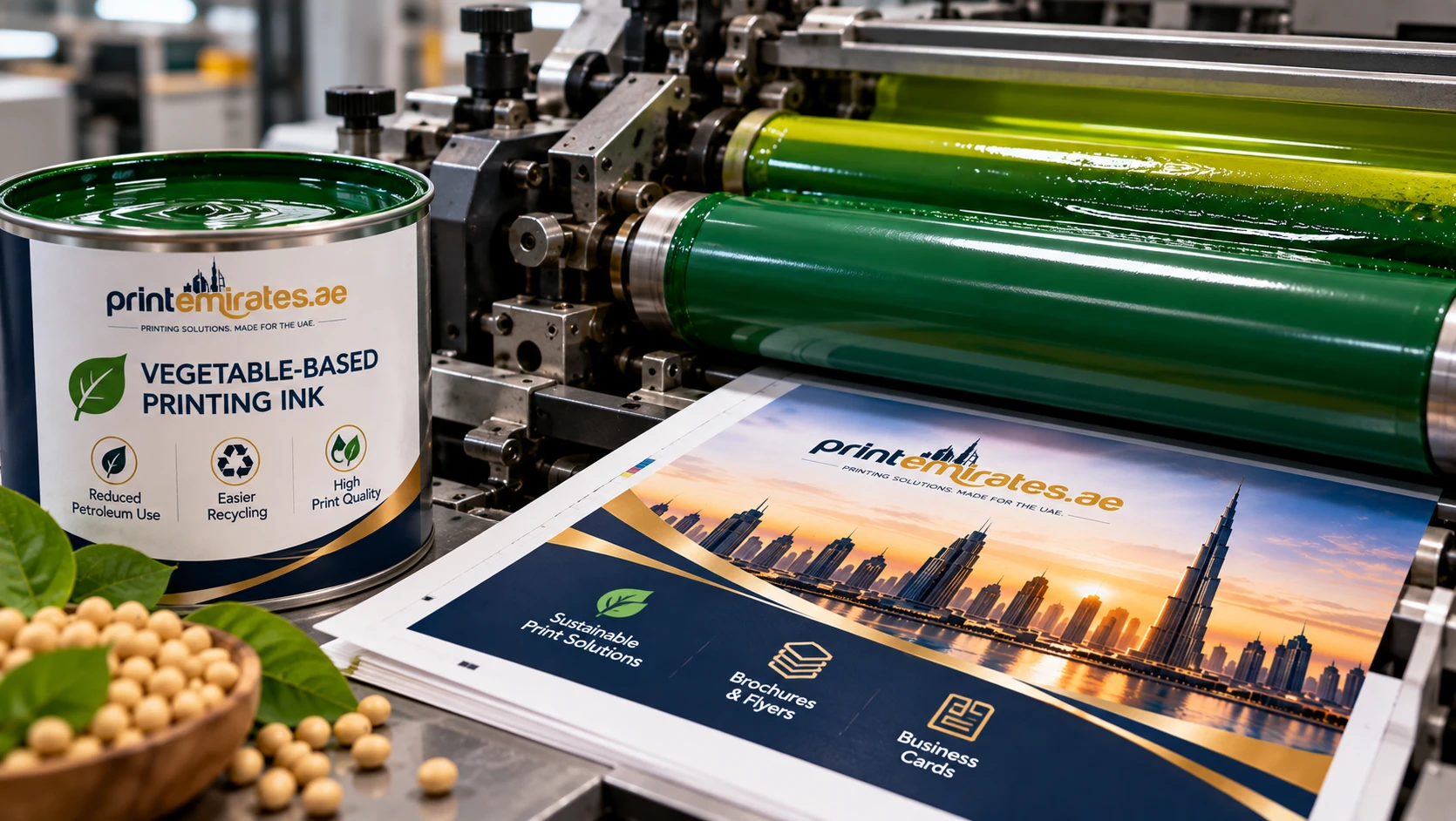
Conventional printing inks are typically petroleum-based, while soy or vegetable-based inks replace some or all of that petroleum content with plant-derived oils. The environmental benefit is generally around reduced petroleum use and, in some cases, easier de-inking during paper recycling, though the exact benefit depends on the specific ink formulation and printing process used.
Soy-based inks are most established in offset printing and are less commonly available for every digital printing process, so confirm whether your chosen printing method supports them for your specific job.
Reusable Merchandise vs Single-Use Items
Perhaps the simplest and most visible sustainability decision a company makes is choosing reusable over single-use promotional items. A cotton tote bag used for years has a very different footprint from a plastic carrier bag used once. A stainless steel bottle replacing repeated single-use plastic bottles over its lifespan is a similar case, provided it's actually reused rather than added to a drawer of unused promotional items.
The most sustainable giveaway is one people actually keep and use, which means design and quality matter as much as the material itself. A well-designed, genuinely useful reusable item does more good than a cheaper, more "sustainable-sounding" one that ends up discarded because it wasn't wanted in the first place. See Bags & Totes and Drinkware for reusable options.
Sustainable Packaging Choices
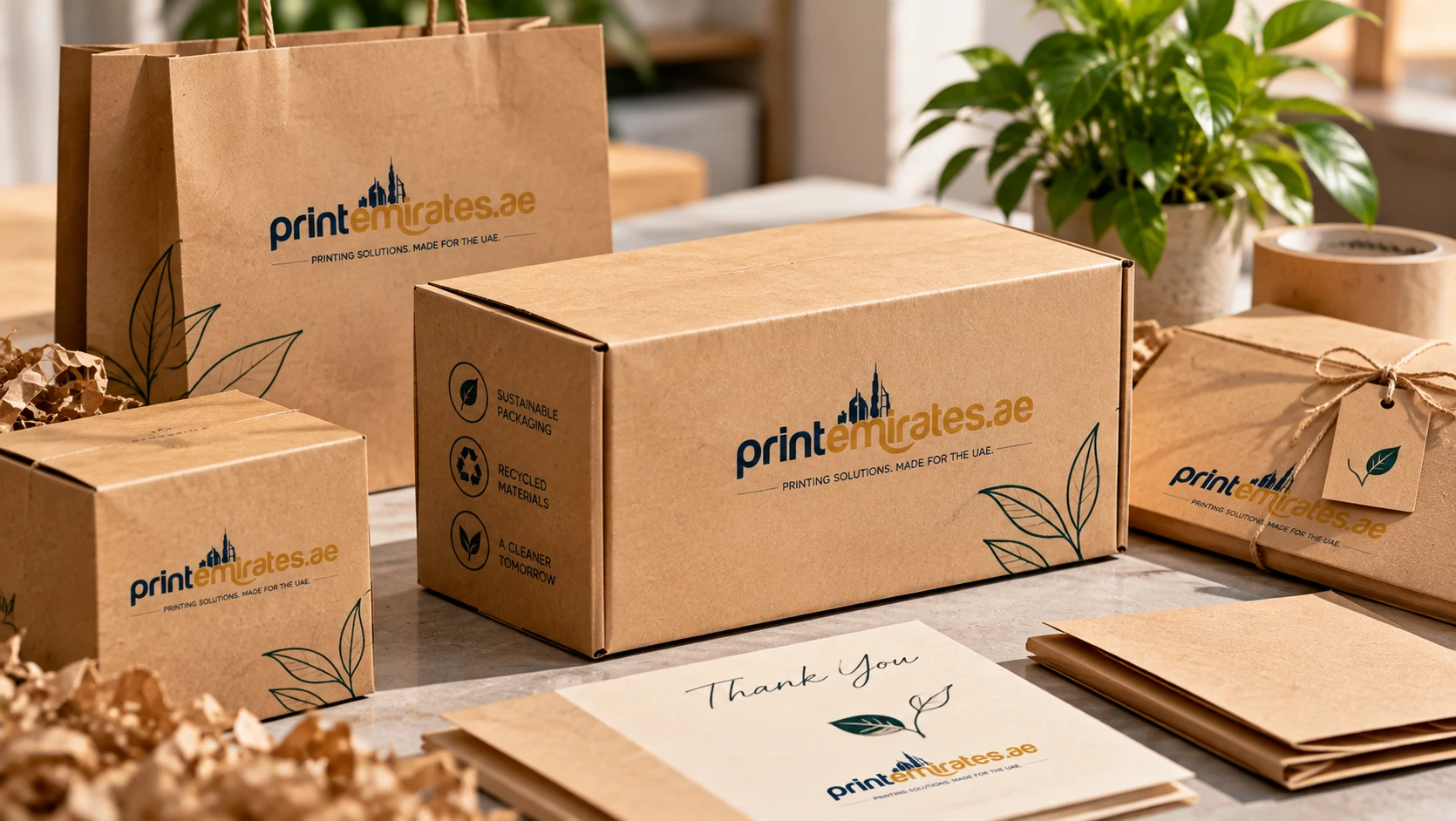
Packaging is an area where small changes have a visible impact, since packaging is often seen and handled by the end customer directly. Kraft paper, uncoated finishes, and simplified structural designs that use less material are all common sustainability choices for boxes and bags. Removing unnecessary layers, such as excess tissue paper or plastic window inserts, is often the easiest reduction to make without compromising the presentation. See Custom Product Boxes and Paper Bags for material options.
What "Eco-Friendly" Doesn't Automatically Mean?
It's worth being direct about the limits of these claims. Recycled paper isn't automatically compostable, and a compostable item isn't automatically recyclable in the same waste stream. A product labelled biodegradable may need specific industrial composting conditions to actually break down as claimed, rather than doing so in general landfill or ordinary recycling. If a specific environmental claim matters for your company's reporting or marketing, ask for the certification or documentation behind it rather than relying on a general description.
Apparel and Uniforms: Sustainable Fabric Choices
Sustainable options extend to apparel as well as paper and packaging. Recycled polyester, made from post-consumer plastic such as bottles, is increasingly used in printed and embroidered workwear and event apparel, and organic cotton is available as an alternative to conventional cotton for staff t-shirts and polos. As with paper claims, confirm exactly what "recycled" or "organic" means for a specific garment, including what percentage of the fabric it applies to, since blends and partial claims are common.
Durability also plays into sustainability here. A well-made uniform or event shirt that lasts several seasons, rather than fading or wearing out after a few washes, reduces the need for repeat orders, which is itself a meaningful reduction in overall material use.
Building a Realistic Sustainability Plan for Your Print!
Start with your highest-volume items, since that's where a material change has the biggest cumulative effect. Switching a high-volume flyer or packaging run to recycled stock matters more, in total impact, than making the same switch on a low-volume item ordered once a year. From there, look at your promotional gifting: replacing single-use items with fewer, better-quality reusable ones both reduces waste and often reads as more premium to the recipient.
Be honest about trade-offs. Some eco-friendly options cost more, and some have a slightly different look or feel than a conventional stock. Decide which of these trade-offs your company is willing to make, and be specific with your printer about what matters most, whether that's cost, appearance, or a particular certification, rather than asking generally for "eco-friendly" without further detail.
Talking About Sustainability Honestly
If your company plans to communicate its sustainability choices to clients or on packaging itself, keep the language as specific and accurate as the materials allow. A general phrase like "eco-friendly" printed on a box invites questions a vague claim can't answer, while a specific statement such as "printed on FSC-certified recycled stock" is both more credible and more defensible if a client or auditor asks for detail. Overstating a claim tends to damage trust more than making a smaller, accurate one.
Cost Considerations
Recycled stock and soy inks can carry a price difference compared with conventional options, and this varies by product and availability. Reusable merchandise, while it may cost more per unit than a disposable equivalent, often delivers more marketing value over its lifespan, since it's seen and used repeatedly rather than discarded after one use. Confirm exact pricing for your chosen sustainable options when you request a quote, since it varies by product and current material availability.
Where to Start If You're New to This?
If this is the first time your company has looked at sustainable print options, a manageable starting point is a single, visible switch rather than a full policy rewrite. Moving your business cards or your most-ordered brochure to a recycled or FSC-certified stock is a low-risk first step, since it changes little about the ordering process itself and gives you something concrete to point to. From there, packaging and corporate gifts are natural next steps, since both are highly visible to clients and staff and offer clear reusable or recycled alternatives.
Review your choices annually rather than treating a single switch as finished. Material availability and certifications change over time, and a policy set once and never revisited tends to drift out of date. Building a short annual check into your print planning keeps the commitment current rather than becoming a one-time announcement.
Common Mistakes to Avoid
Assuming all "eco" claims are equivalent. "Recycled," "FSC-certified," "biodegradable," and "compostable" are different, specific claims. Confirm which applies to your order.
Choosing a low-quality reusable item. A poorly made reusable gift that gets discarded defeats the purpose. Quality matters as much as material.
Overlooking packaging in favour of paper. Packaging is often the most visible sustainability choice to a customer, and it's worth prioritising alongside stationery.
Not asking for documentation. If a claim matters for reporting or marketing, ask for the certificate or specification behind it.
Trying to change everything at once. Start with your highest-volume items for the biggest impact, then expand from there.
Frequently Asked Questions
Q. Is recycled paper more expensive than standard paper?
Ans. It can carry a price difference depending on the stock and grade. Confirm current pricing when you request a quote.
Q.Do you offer FSC-certified stock?
Ans.Confirm FSC certification availability for your chosen product when you request a quote.
Q.Are soy-based inks available for all printing?
Ans.Availability depends on the printing process and product. Confirm for your specific job when you request a quote.
Q.What's the most sustainable corporate gift option?
Ans.A well-made, genuinely useful reusable item, such as a quality water bottle or tote bag, generally has more impact than a lower-quality item that ends up discarded.
Q.Can packaging be made from recycled or kraft materials?
Ans.See Custom Product Boxes and Paper Bags for material options, and confirm specific sustainable choices when you request a quote.
Plan Your Sustainable Print
Start with your highest-volume items and be specific about which sustainability claims matter most to you. For recycled stock, packaging and reusable corporate gifts, see our Corporate Gifts and Packaging pages, or message us on WhatsApp with what you're looking to change.