Custom T-Shirt Printing in Dubai: Minimum Orders, Methods and Pricing
T-shirt printing in Dubai comes down to three decisions: the print method, the quantity, and the fabric. Screen printing suits large runs of a simple design, DTF transfer suits short runs and full-color artwork, and sublimation suits light polyester only. Minimum orders and prices depend on the method, the number of colors, and the garment.
This guide explains the main printing methods, what drives the price, how to choose a quantity, and how to prepare artwork so your order comes out right first time.
T-Shirt Printing Methods Compared
Each method puts a design on fabric in a different way, and each has a set of jobs it does best. Choosing the right one saves money and avoids a print that cracks, fades, or feels stiff.
Method | Best for | Typical run size | Notes |
Screen printing | Solid colors, repeat designs | Large runs | Lowest unit cost at volume, with a setup cost per color |
DTF transfer | Full-color and photographic artwork | Small to medium runs | Handles gradients and many colors, good for mixed sizes |
Sublimation | All-over designs on polyester | Small to medium runs | Works on light polyester only, not cotton |
Embroidery | Logos on polos, caps, and jackets | Any | Formal and durable, less common on plain t-shirts |
Confirm which of these methods are offered before you plan an order.
Screen Printing
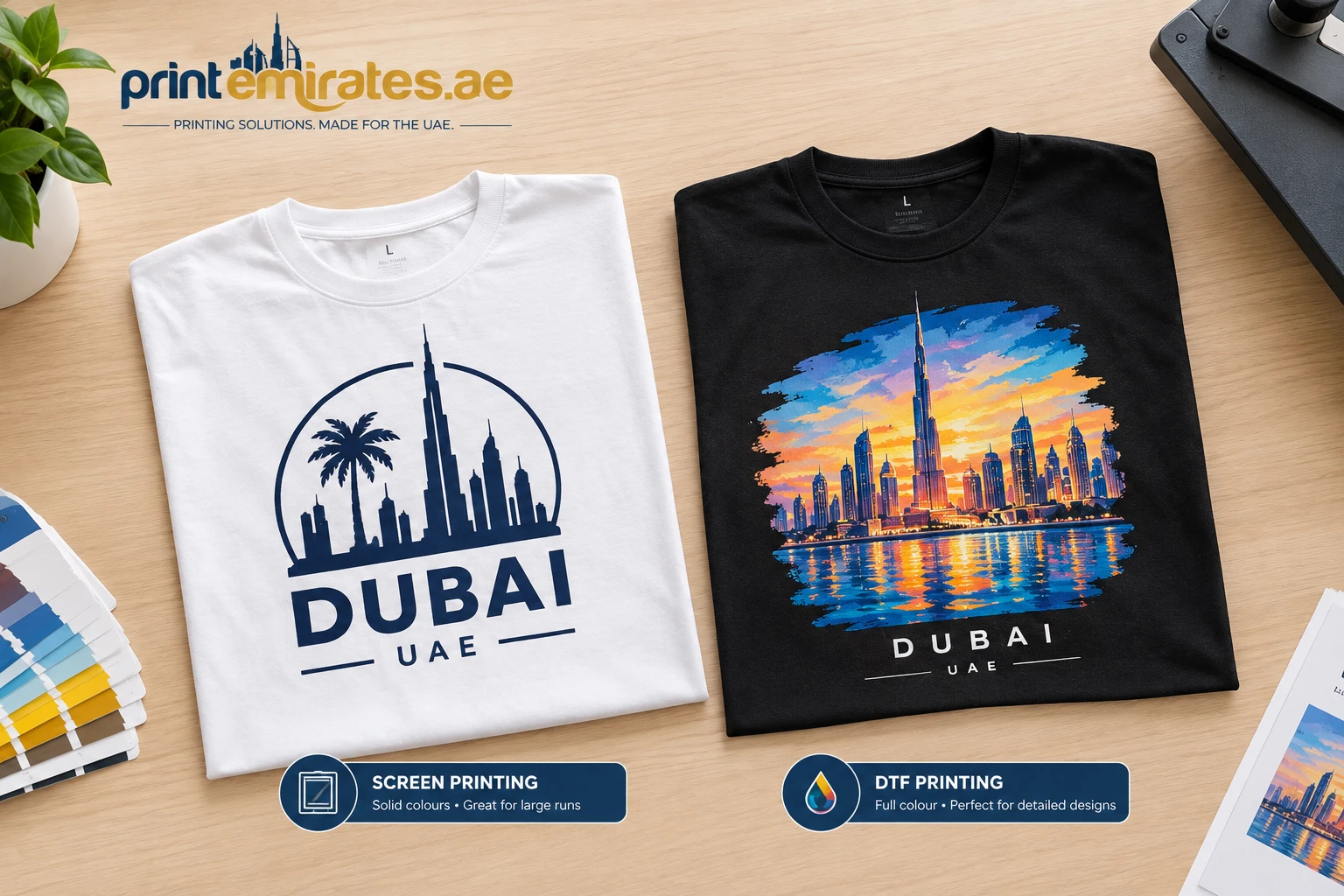
Screen printing pushes ink through a mesh screen, one color at a time. Each color needs its own screen, so the setup cost rises with the number of colors, but once the screens are made, the cost per shirt is low. That makes it the natural choice for large runs of the same design, such as staff uniforms, school events, or a brand campaign.
It works best with solid, flat colors and clean edges. Fine gradients and photographic detail are not its strength, so a design with many colors or soft shading is usually better suited to a different method.
DTF Transfer
DTF, or direct-to-film, prints the design onto a film that is then heat-pressed onto the shirt. It handles full-color artwork, gradients and photographs well, and it needs no separate setup for each color, so short runs are practical.
That flexibility suits small businesses, teams and events that want a detailed design in modest quantities or a run with several different designs. Good-quality DTF holds up well to washing when it is applied and cared for properly.
Sublimation
Sublimation uses heat to bond dye into the fibers of polyester fabric, which allows all-over, edge-to-edge designs that do not crack or peel. It only works on light-colored polyester or polyester blends with a high polyester content, so it is the usual choice for sportswear and performance shirts and not for standard cotton t-shirts.
Which Method Should You Choose?
Start with the design and the quantity. A simple one- or two-color logo on 200 shirts points to screen printing. A colorful illustration on 30 shirts points to DTF. A full-coverage sports design on polyester points to sublimation.
If you are unsure, send the artwork and the quantity and ask for a recommendation. A good printer will explain the trade-off between cost, detail, and durability, rather than simply choosing the cheapest option.
Minimum Orders
Minimum quantities vary by method, because setup work is spread across the run. Screen printing usually has a higher minimum than DTF, since the screens must be prepared before a single shirt is printed. Very small orders are more practical with a transfer method.
Minimums for each method and garment are confirmed by production, and they can change with the season. Ask before you design a run around a specific number.
What Affects T-Shirt Printing Prices?
Prices are not published in this guide, because they depend on several things that change from order to order.
Factor | How it affects the price |
Quantity | Unit cost falls as quantity rises, especially for screen printing. |
Number of colors | More colors mean more screens for screen printing. |
Print size and position | Larger prints and extra positions, such as sleeve or back, cost more. |
Garment | Heavier or premium cotton costs more than a basic shirt. |
Method | DTF, screen printing, and sublimation are priced differently. |
Urgency | Rush orders may carry a supplement. |
For a real price, use the configurator or request a quote with your quantity, garment, and print positions.
Choosing the Right T-Shirt
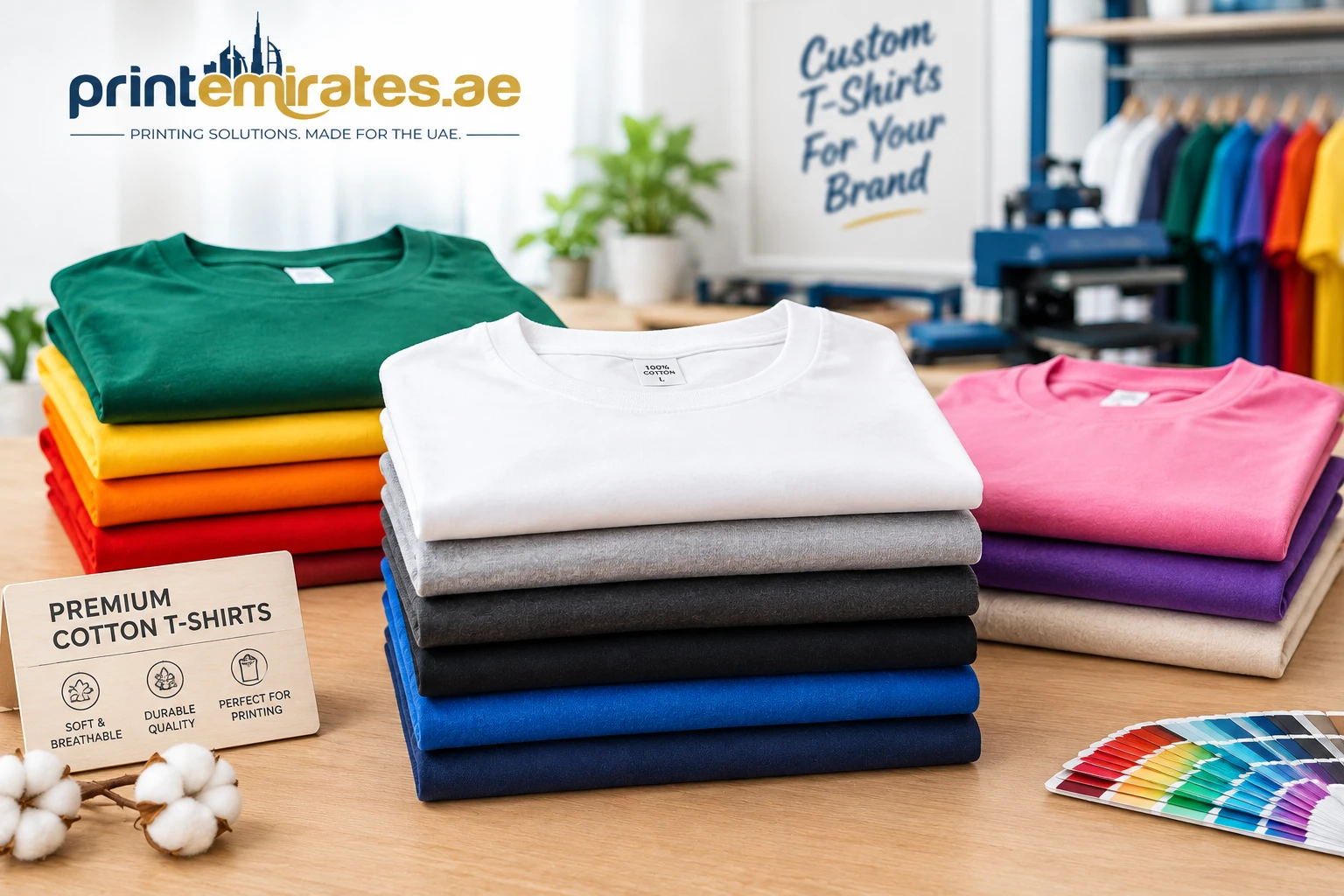
The garment matters as much as the print. Cotton is the standard choice for comfort and for most printing methods, and a heavier fabric feels more substantial and holds a print better. Fabric weight is usually given in grams per square meter, and the available range is confirmed by production.
Think about the fit and the audience. Unisex cuts suit most teams, while kids' sizes and women's fits matter for schools and mixed groups. A full-size run from XS to 5XL means everyone on a team can be covered. See T-Shirt Printing for sizes, colors, and print positions.
Print Positions and Artwork Size
The standard position is a large front print, but many orders add a small left-chest logo, a sleeve print or a back print. Each extra position adds cost, so decide which ones matter. A small chest logo with a larger back design is a popular combination for staff and event shirts.
Keep the artwork proportionate to the garment. A very large print on a small size can look cramped and can feel stiff, so scale the design to each size where the order covers a range.
Preparing Your Artwork
Send the design as a vector file, such as PDF,AI, or SVG, or as a high-resolution image at the print size. Low-resolution screenshots and images pulled from a website print poorly, and they are the most common reason an order is delayed. Outline any fonts, and tell the printer the exact colors you need matched.
The full standards are in the Artwork Guide. For screen printing, also tell the printer how many colors the design uses, since that sets the number of screens.
Designing for Fabric Color
The color of the shirt changes how a design looks. A white or light shirt shows colors as designed, while a dark shirt needs a white underlay or a method that can print light colors over dark, which affects cost and feel. If your brand colors are specific, say so at the start and ask whether they can be matched on your chosen fabric. Bold, high-contrast designs read best on the shirt, especially from a distance at an event or on a stand.
Washing and Durability
A good print should survive regular washing. Turn the shirt inside out, wash it at a moderate temperature, and avoid a hot tumble dryer, since heat is the main cause of cracking and fading. Different methods age differently: screen prints are hard-wearing when properly cured, and DTF is durable when correctly pressed. Ask the printer for care instructions and pass them on with the order.
Common Uses for Printed T-Shirts
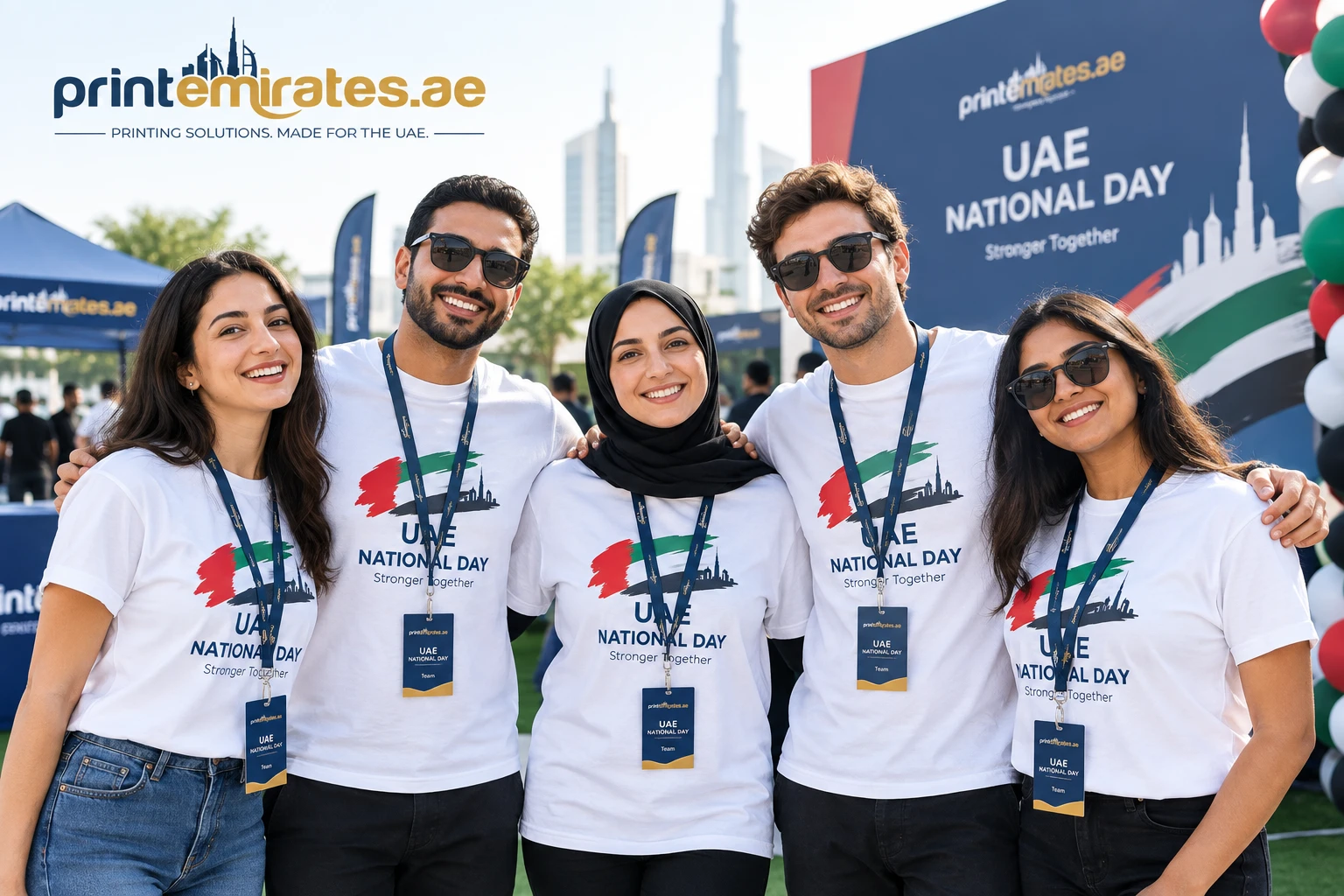
Printed shirts serve many purposes across the UAE. Companies order them for staff and events, schools for sports days and National Day, and retailers and cafes for team uniforms. Exhibitors order them for stand teams, and there is a link between apparel and stand planning, so see our page on staff uniforms for your exhibition stand and our exhibition giveaway options.
If you also need polos, hoodies, or caps, see Polo Shirt Printing, Hoodies & Jackets, Caps, or the full Apparel & Uniforms range.
Planning Your Order
Decide the quantity, the sizes, and the print method before you request a quote. Collect size numbers from the team early, since guessing a split is the most common reason for a reorder. Confirm the artwork, the colors, and the delivery date, and allow time for proof.
As a general guide, simple runs are quicker than complex ones, and orders that need several print positions or a full-size range take longer. Confirm the exact production time when you order.
Common T-Shirt Printing Mistakes to Avoid
- Choosing the wrong method. A photo printed by screen printing, or a huge run done by transfer, costs more or looks worse.
- Guessing sizes. Collect a real-size breakdown before you order.
- Low-resolution artwork. A blurry image prints blurry.
- Ignoring the garment. A thin shirt can undermine a good print.
- Skipping the proof. Check colors, spelling, and position before printing starts.
Order Your T-Shirts
Choose the method for your design, confirm the quantity and sizes, and send print-ready artwork. For T-shirt printing in Dubai, visit our T-Shirt Printing page or message us on WhatsApp with your design and quantity.
FAQs
Q. What is the minimum order for t-shirt printing in Dubai?
Ans. It depends on the method and the garment. Confirm the minimum for your order when you request a quote.
Q. How much does t-shirt printing cost?
Ans. Price depends on quantity, colors, print size, garment, and method. Use the configurator or request a quote.
Q. Will the print crack after washing?
Ans. A properly applied print should last. Follow the care instructions and avoid high heat.
Q. Can I mix sizes in one order?
Ans. Yes, a mixed-size run is normal. Confirm size availability when you order.
Q. How quickly can I get printed t-shirts?
Ans. Confirm production time for your order when you request a quote.